Past Events

Past Events, Uncategorized

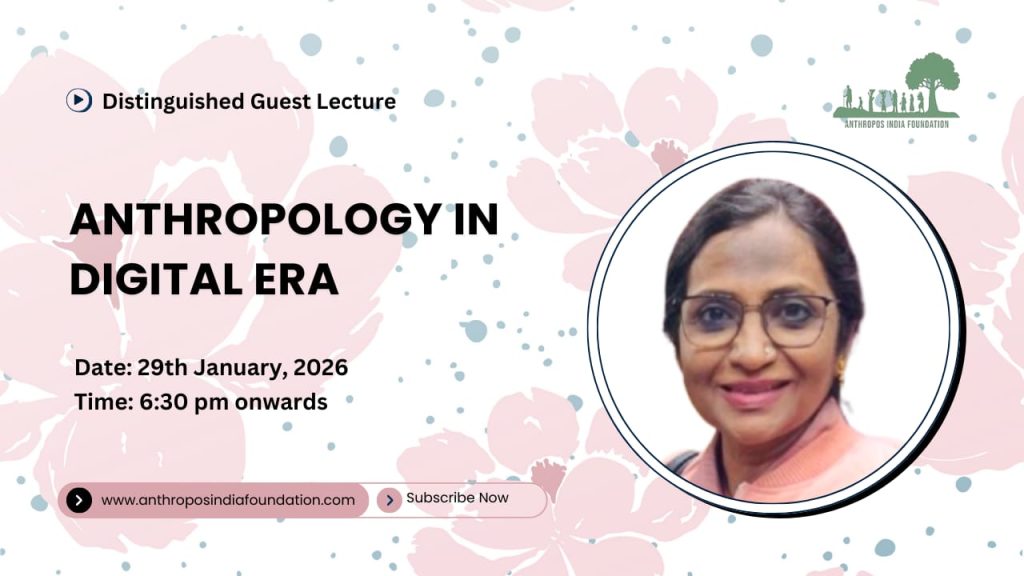
Designing for the Warrior: Anthropology Behind India’s Defence Technologies | Dr. Shweta Rawat | AIF | Distinguished Guest Lecture | 30th December

Dr Shweta Rawat is working as Scientist ‘F’ in Defence Institute of Physiology and Allied Sciences (DIPAS) Delhi. She is an Alumni of University of Delhi , having done her MSc and PhD from Department of Anthropology, University of Delhi. Her area of interest is anthropometry-based sizing and designing of protective gears, equipment uniform and workstation. Dr. Shweta Rawat is also working jointly with Rapid Action Force (RAF), CRPF and SPG for designing of protective anti-riot gear, including PRABLA (India’s first Female Full body protector). She has been granted four international patents ( US , South African, Russian and Australian patents) and three national patents under her leadership. Also she has 6 design registrations certifications to her credit. She is a well published figure with her research published in journals of international repute along with DRDO specific literature. She has prestigious awards like Technology group award 2009 and 2018, Director’s award, and Technology day oration 2018 to her credit. Recently she has been awarded “National Award for Young Woman showing excellence through Application of S&T for Societal Benefits” by Hon’ble President of India for her work towards Development of full body protectors for females engaged in riot control situations. She and her team were honoured with the prestigious “AGNI award for excellence in Self reliance” on Technology Day 2022.

Past Events, Uncategorized

ETHNOGRAPHY AND DOCUMENTATION OF MATERIAL CULTURE | AIF | Winter Workshop | 24th-28th December

About the Workshop
A specialised workshop and training programme designed for young scholars-PhD
researchers and early-career faculty-focusing on Ethnography and Documentation
of Material Culture.

Participants will gain hands-on orientation in:
. Proposal Writing
. Ethnographic methods & fieldwork techniques
. Documentation of material culture
. Public policy perspectives
. PRA (Participatory Rural Appraisal) tools
. Qualitative data,, observations, ethnographic writing and presentations

It’s a 5 day programme, including a 1 day field visit integrated with workshop
sessions.

Past Events, Uncategorized

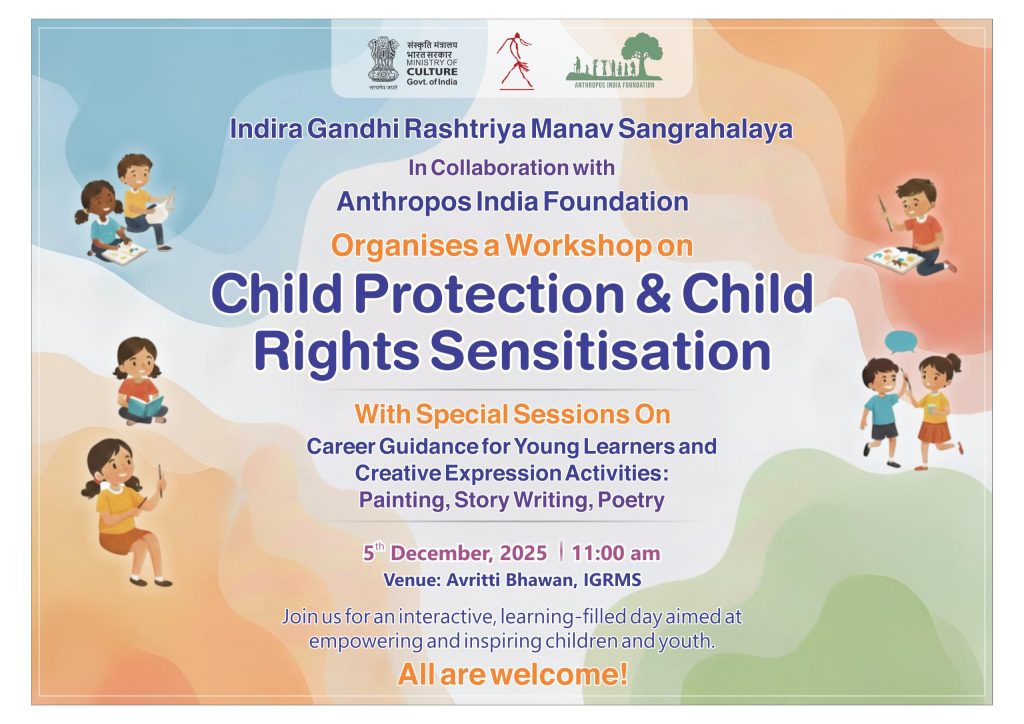
Child Protection & Child Rights Sensitisation With Special Sessions On Career Guidance for Young Learners and Creative Expression Activities: Painting, Story Writing, Poetry | AIF | 5th December 2025

Dr Shweta Rawat is working as Scientist ‘F’ in Defence Institute of Physiology and Allied Sciences (DIPAS) Delhi. She is an Alumni of University of Delhi , having done her MSc and PhD from Department of Anthropology, University of Delhi. Her area of interest is anthropometry-based sizing and designing of protective gears, equipment uniform and workstation. Dr. Shweta Rawat is also working jointly with Rapid Action Force (RAF), CRPF and SPG for designing of protective anti-riot gear, including PRABLA (India’s first Female Full body protector). She has been granted four international patents ( US , South African, Russian and Australian patents) and three national patents under her leadership. Also she has 6 design registrations certifications to her credit. She is a well published figure with her research published in journals of international repute along with DRDO specific literature. She has prestigious awards like Technology group award 2009 and 2018, Director’s award, and Technology day oration 2018 to her credit. Recently she has been awarded “National Award for Young Woman showing excellence through Application of S&T for Societal Benefits” by Hon’ble President of India for her work towards Development of full body protectors for females engaged in riot control situations. She and her team were honoured with the prestigious “AGNI award for excellence in Self reliance” on Technology Day 2022.

Past Events, Uncategorized

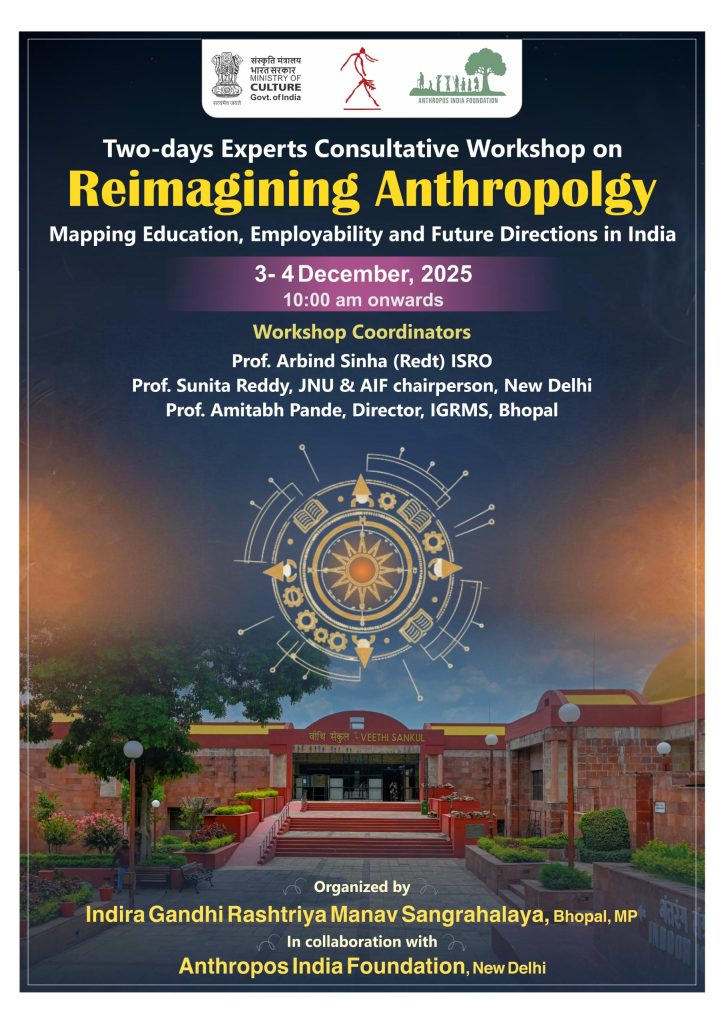
Two-days Experts Consultative Workshop on Reimagining Anthropolgy Mapping Education, Employability and Future Directions in India| AIF | 3- 4 December, 2025

Consultative Workshop on “Reimagining Anthropology: Mapping Education, Employability and Future Directions in India” was successfully organised on 3–4 December 2025 at the Indira Gandhi Rashtriya Manav Sangrahalaya (IGRMS), Bhopal, in collaboration with Anthropos India Foundation, New Delhi.

The workshop brought together leading anthropologists, academicians, and policy thinkers from across India, who participated both offline at IGRMS, Bhopal, and online via Google Meet. The deliberations focused on critically examining the current state of anthropology education in India, emerging career pathways, and the discipline’s future relevance in policy, development, and interdisciplinary research.

Past Events, Uncategorized

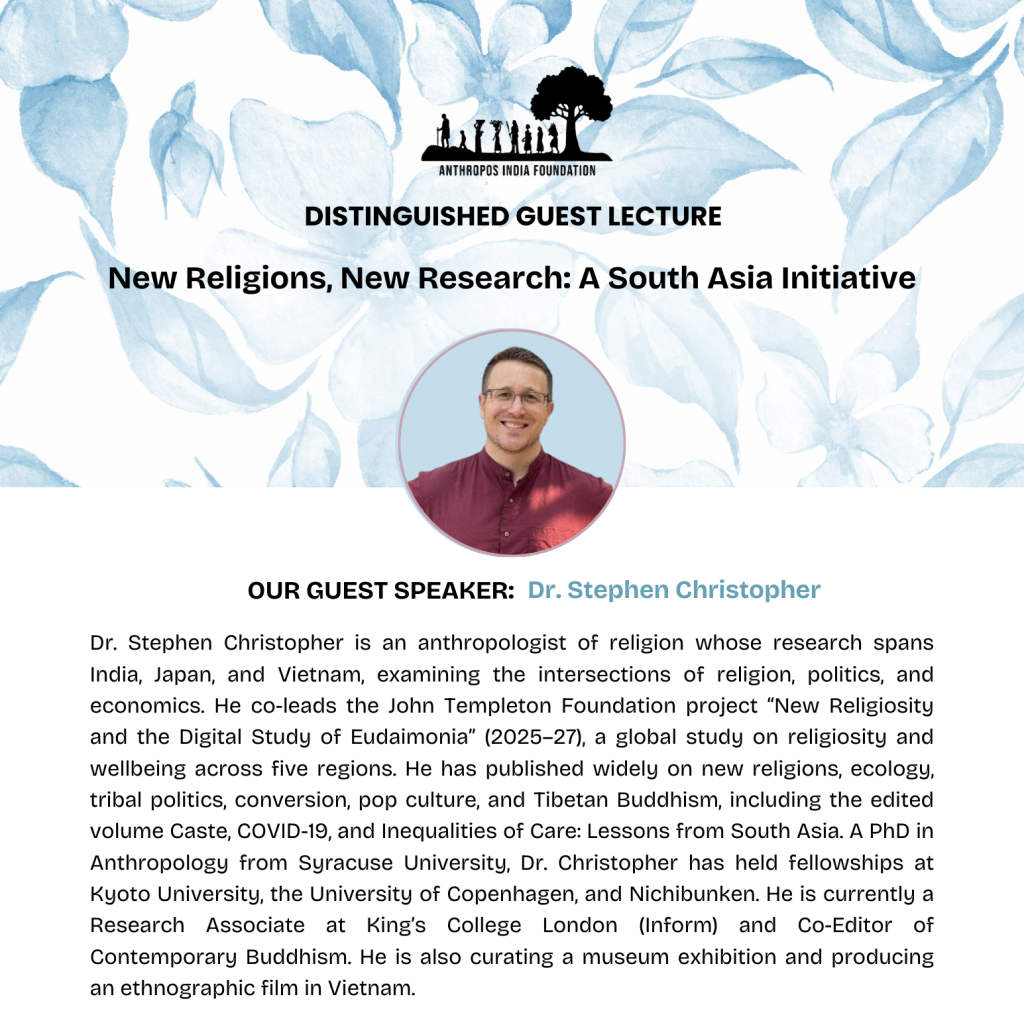
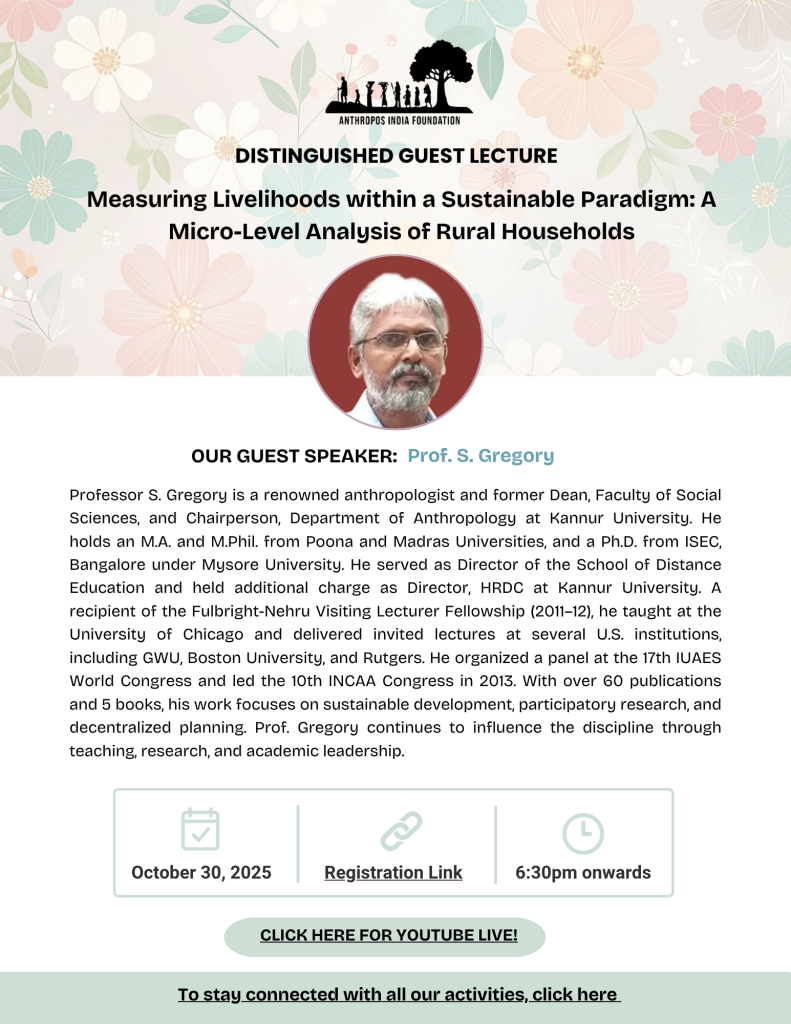
New Religions, New Research: A South Asia Initiative | Distinguished Guest Lecture| Dr. Stephen Christopher | 25 November 2025

Dr. Stephen Christopher is an anthropologist of religion whose research spans India, Japan, and Vietnam, examining the intersections of religion, politics, and economics. He co-leads the John Templeton Foundation project “New Religiosity and the Digital Study of Eudaimonia” (2025–27), a global study on religiosity and wellbeing across five regions. He has published widely on new religions, ecology, tribal politics, conversion, pop culture, and Tibetan Buddhism, including the edited volume Caste, COVID-19, and Inequalities of Care: Lessons from South Asia. A PhD in Anthropology from Syracuse University, Dr. Christopher has held fellowships at Kyoto University, the University of Copenhagen, and Nichibunken. He is currently a Research Associate at King’s College London (Inform) and Co-Editor of Contemporary Buddhism. He is also curating a museum exhibition and producing an ethnographic film in Vietnam.

Past Events, Uncategorized

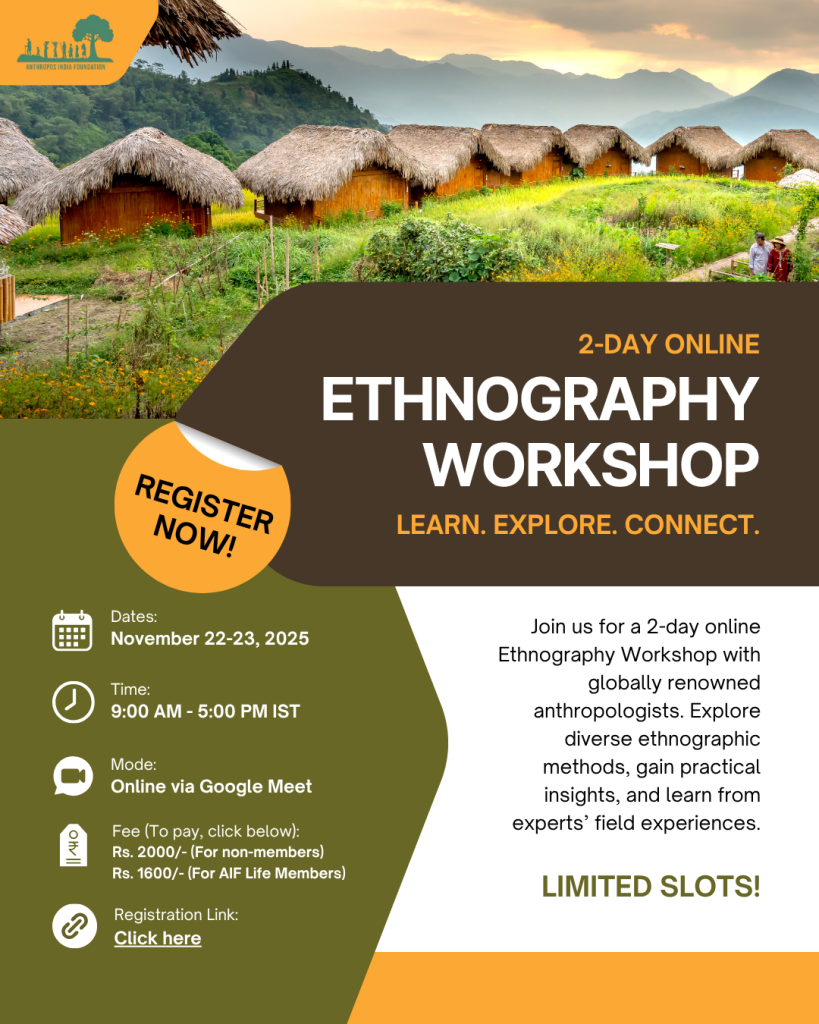
TWO-DAY ONLINE ETHNOGRAPHY WORKSHOP | 22nd and 23rd November, 2025

The 2-day online Ethnography Workshop on 22nd and 23rd November, 2025 organised by Anthropos India Foundation (AIF), attended by scholars, students, and professionals from different parts of India, exploring diverse ethnographic methods, gaining practical insights, and learning from experts’ field experiences.
Dr.Sunita Reddy welcomed the participants and explained the aim of the workshop introducing different approaches within ethnography and helping young scholars understand both classical and contemporary field methods. As the first session of the workshop, she defined ethnography in a direct way: studying people in their natural settings through long-term immersion.

She went over basic concepts—participant observation, building rapport, reflexivity, and maintaining field diaries.

She repeatedly emphasized that ethnography is both the fieldwork and the written output.

She also discussed practical difficulties like negotiating access, bias, emotional involvement, and working in stratified societies.
Session by Dr. Stephen Christopher
He shared practical experiences from fieldwork in Himachal Pradesh, Japan, and Vietnam.

He explained the difference between fieldnotes and final ethnography, noting that fieldnotes are usually rough, incomplete, and written quickly.

He highlighted issues of insider/outsider positions, the importance of silence in interviews, and the usefulness of photo elicitation and “go-along” interviews.
Session by Dr. Mitoo Das

Dr. Mitoo Das’s session focused on how digital spaces have become real ethnographic fields. She explained that online interactions—hashtags, “seen” receipts, deleted messages, emojis, late-night voice notes—carry cultural meaning just like gestures or silences in physical settings. Her emphasis was on reading digital behavior carefully, understanding how people express emotions online, how platforms shape what we share, and how access, privacy, and anonymity differ in India. She also stressed ethical responsibility, constant reflexivity, and the fact that the digital world is not separate from everyday life but deeply woven into it.

Session by Dr. Alison Kahn
Her session focused on applying ethnography to study Artificial Intelligence. She explained her work on a “museum of AI cultures.”

Her main point was that AI systems lack embodied and cultural grounding, which is why anthropologists should be cautious when interpreting AI-generated content.

She introduced ideas like Humboldt’s synthesis, Turner’s uncertainty, and Geertz’s “thick description” to explain how ethnographic thinking can help understand the social impact of AI. 

She also advised scholars to practice self-care and avoid depending excessively on AI tools for academic work.

Day 2
Session by Prof. G. Kanato Chophy
He spoke about connecting ethnographic micro-studies to larger regional frameworks.

He explained how studying only one village or community is not enough for understanding broader cultural patterns.

Using examples from Northeast India, he introduced concepts like the “Baptist Highland” and the “Brahmaputra–Chinwin culture complex,” showing how cultural connections cross national boundaries.

He emphasized that young researchers must learn to develop conceptual frameworks, not only collect descriptive data.
Session by Dr. S. B. Roy

His session focused on “scientific ethnography” for tribal development.
He listed four essential elements:
1. Participant observation
2. Understanding culture and institutions
3. Studying people in their natural environment
4. Co-adaptation
He also explained a seven-step method for applying ethnographic findings to real development programs, with examples from Odisha and West Bengal.
He stressed observing natural resources, rituals, and community organization as part of ethnographic analysis.
Session on Autoethnography (Dr. Archana Kaushik)
She described autoethnography as using one’s own life experiences as data.

She clarified the difference between autobiography and autoethnography, highlighting that the latter always links personal experience to wider culture and society.

She encouraged participants to write honestly about experiences, especially when dealing with sensitive topics like illness or trauma.
Overall Observations
The workshop covered classical ethnography, digital ethnography, regional studies, and autoethnography.

Each speaker brought examples from their own fieldwork, which made the sessions practical and not only theoretical.

A recurring theme across sessions was the importance of reflexivity and the need for clear conceptualization in research.

Discussions were interactive, with participants sharing doubts and field challenges.
Conclusion

The two-day workshop provided a clear overview of ethnographic methods, their applications, and the current challenges faced by researchers. The sessions collectively emphasized careful observation, ethical research, conceptual clarity, and the importance of linking individual case studies to broader social processes.

Past Events, Uncategorized

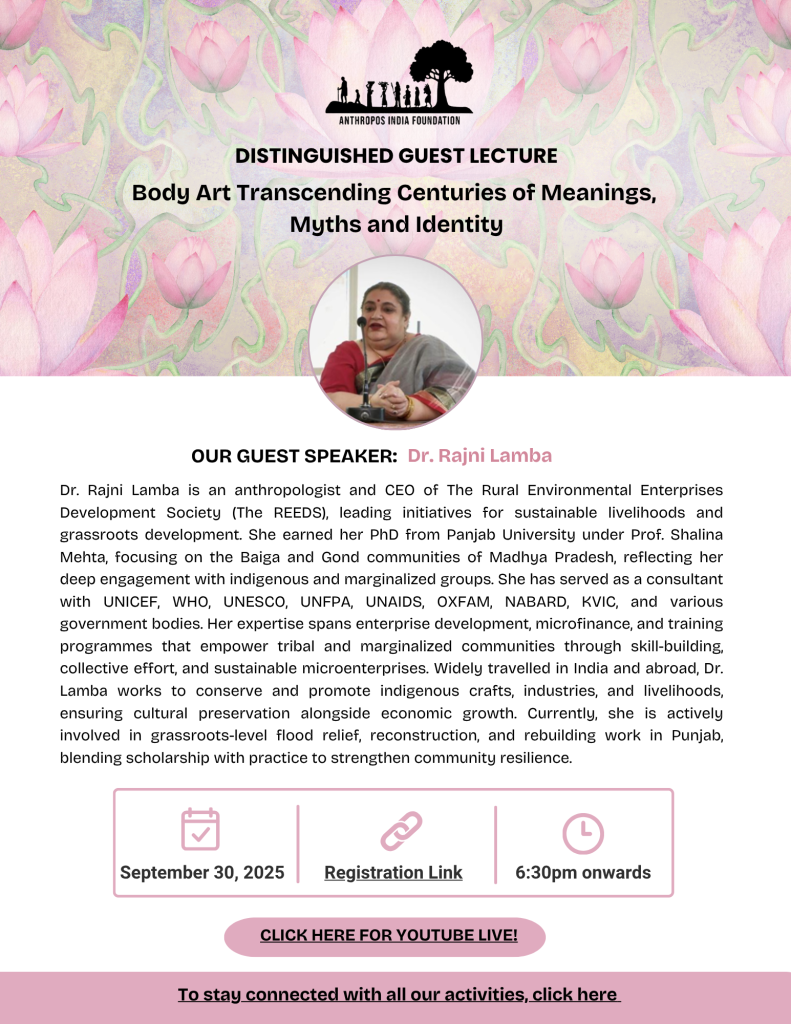
Body Art Transcending Centuries of Meanings, Myths and Identity -Dr. Rajni Lamba | AIF Guest Lecture | 30 September 2025 | 6.30 p.m.

Anthropos India Foundation hosted a lecture titled “Body Art Transcending Centuries of Meanings, Myths and Identity” by Dr. Rajni Lamba on September 30, 2025 at 6:30pm via Zoom Meeting and Youtube Live. The session offered an insightful exploration into the cultural significance, lived meanings, and contemporary challenges of traditional tattooing practices (Gudna) among tribal communities in Central India.

Key Themes Discussed

Cultural Identity and Preservation

Dr. Lamba emphasized how traditional tattoos serve as enduring markers of tribal identity. However, with younger generations increasingly hesitant to embrace tattooing in its traditional form, there is a real danger of these cultural practices fading. The lecture underlined the urgency of documenting and preserving Gudna before the knowledge and artistry of older practitioners vanish.

Health and Wellness Connections

The session revealed how tattooing practices are not merely ornamental but deeply interwoven with tribal conceptions of health, fertility, and well-being. Tattoos were described as being “infused with meaning pertaining to health, culture, and community wellness.”

Livelihood and Economic Aspects

Tattooing has historically been both a ritual and a livelihood for specific communities. The discussion examined the potential of Geographical Indication (GI) certification to safeguard cultural ownership of tattoo designs and provide economic recognition and benefits for tribal artists.

Rites of Passage

Drawing on ethnographic insights, the lecture highlighted tattoos as crucial to various rites of passage—life stages such as puberty, marriage, and motherhood—where they carry symbolic and social meanings. Research by Nita Mawar was cited, showing how tattoo traditions surfaced in studies of health-seeking behaviors during these life phases.

Commercial Exploitation Concerns

Concerns were raised about the misappropriation and commercialization of traditional tattoo designs. Professor Ota noted that efforts are underway to apply for GI protection to safeguard Gudna from exploitation while ensuring respect for tribal ownership.

Research Collaboration Proposal

One of the lecture’s important outcomes was the proposal for a collaborative research project to systematically document and protect these traditions. Suggested components included:

Mapping tattoo practices across Central India
Documenting designs and their cultural meanings
Preserving tribal identity through Gudna
Examining livelihood aspects for tattoo practitioners
Investigating health-related dimensions (beliefs and safety concerns)
Advocating for GI certification of culturally significant tattoo forms

The lecture brought together anthropologists, cultural practitioners, and scholars from various institutes like Delhi University, Punjab University, University of Lucknow, ICMR, IGNOU, IGRMS etc., in a vibrant exchange of ideas, reiterating the pressing need to safeguard indigenous knowledge systems before they are lost to time.


Past Events, Uncategorized

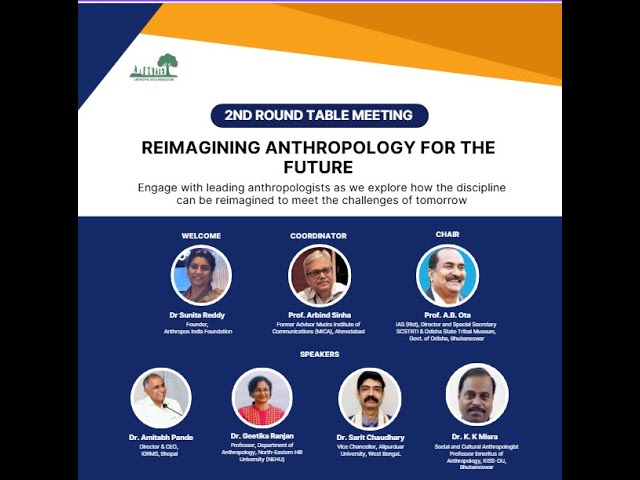
REIMAGINING ANTHROPOLOGY FOR THE FUTURE | ROUND TABLE MEETING | AIF | 23 September 2025

The lecture “From Insight to Impact – Anthropology’s Mission Ahead” by Prof. Arbind Sinha, organized by the Anthropos India Foundation as a part of their monthly distinguished guest lecture on 21st August 2025 at 6:30pm through zoom meeting and YouTube Live, focused on the need for anthropology to move beyond theory and create practical change in society. 
Prof. Sinha explained that anthropology should not remain restricted to academia but must engage with real communities, helping address issues such as health, education, development, livelihoods, and disaster management. He emphasized the importance of the local perspective (emic view), where communities’ own culture and voices shape any intervention. This bottom-up approach, he argued, ensures trust, sustainability, and meaningful impact. A key theme of the lecture was the use of visual anthropology – films, photography, and digital storytelling – as a way to make complex social realities more visible and to amplify the voices of marginalized groups. Prof. Sinha also highlighted the need for training and capacity building for young anthropologists. He suggested that along with theories, students should gain skills in research methods, communication, and digital literacy, preparing them to work effectively in both field research and policy-making spaces. His own experiences at ISRO, MICA, and other institutions showed how anthropology can successfully link insight with practice.
In his concluding remarks, Prof. Sinha outlined a vision for the future of anthropology. He emphasized the need for participatory and ethical approaches, where communities are engaged as active partners rather than passive subjects of research. He highlighted that anthropology should be transformative—informing policy, empowering communities, and addressing real-world challenges—rather than remaining confined to academic debates. By bridging knowledge with action, he noted, the discipline can truly move from insight to impact, serving as a catalyst for positive social change in India and beyond. The session concluded with an engaging Q&A, attended by experts, scholars, and students from institutions such as the University of Hyderabad, Utkal University, IBRAD Kolkata, ICMR-NARI, IGMRS Bhopal, Vidyasagar University, Nagaland University, and the Anthropological Survey of India. In total, 34 participants joined via Zoom and 78 via YouTube Live.

Shopping Cart
Scroll to Top